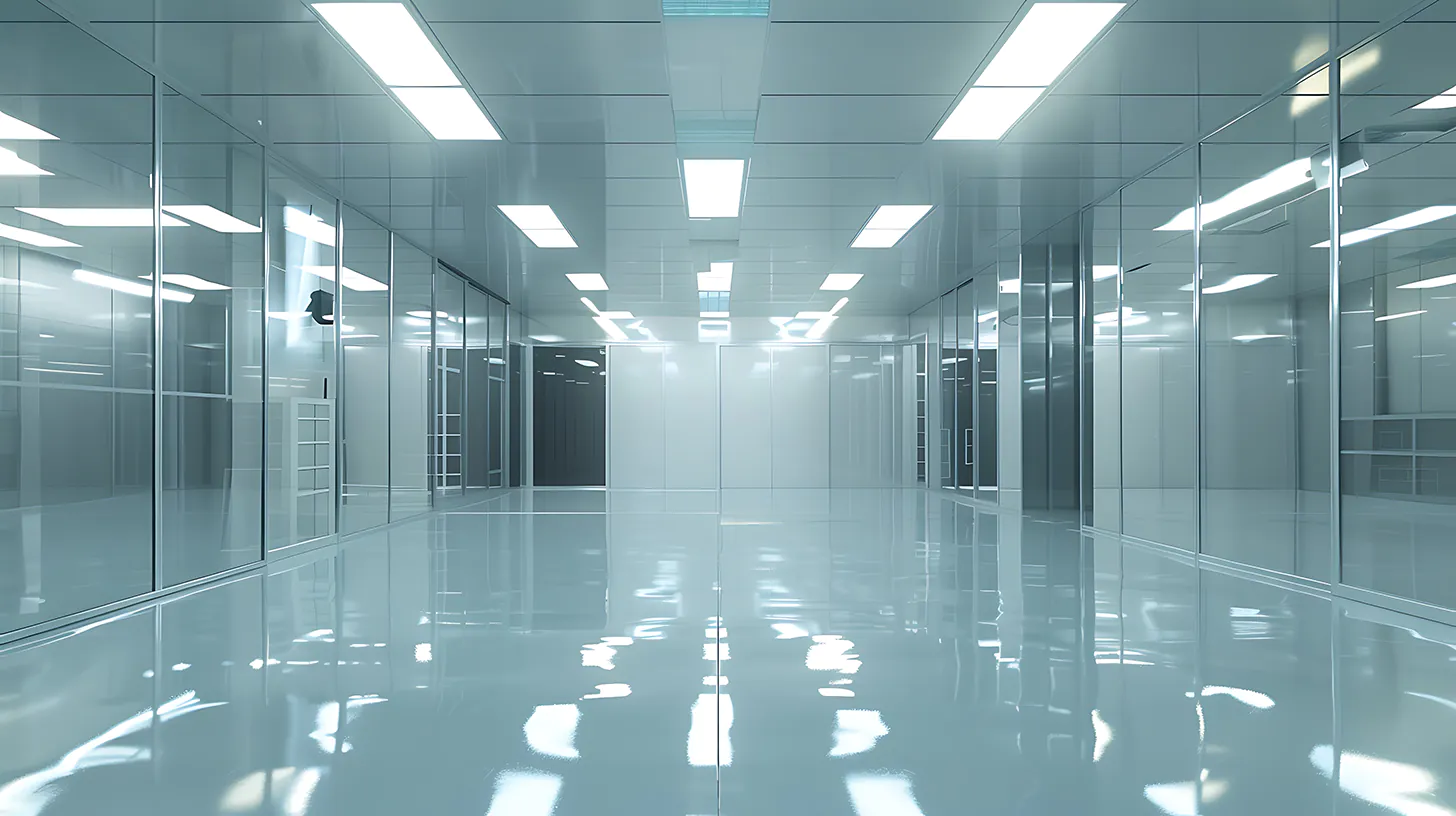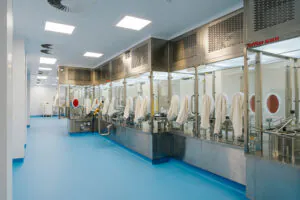

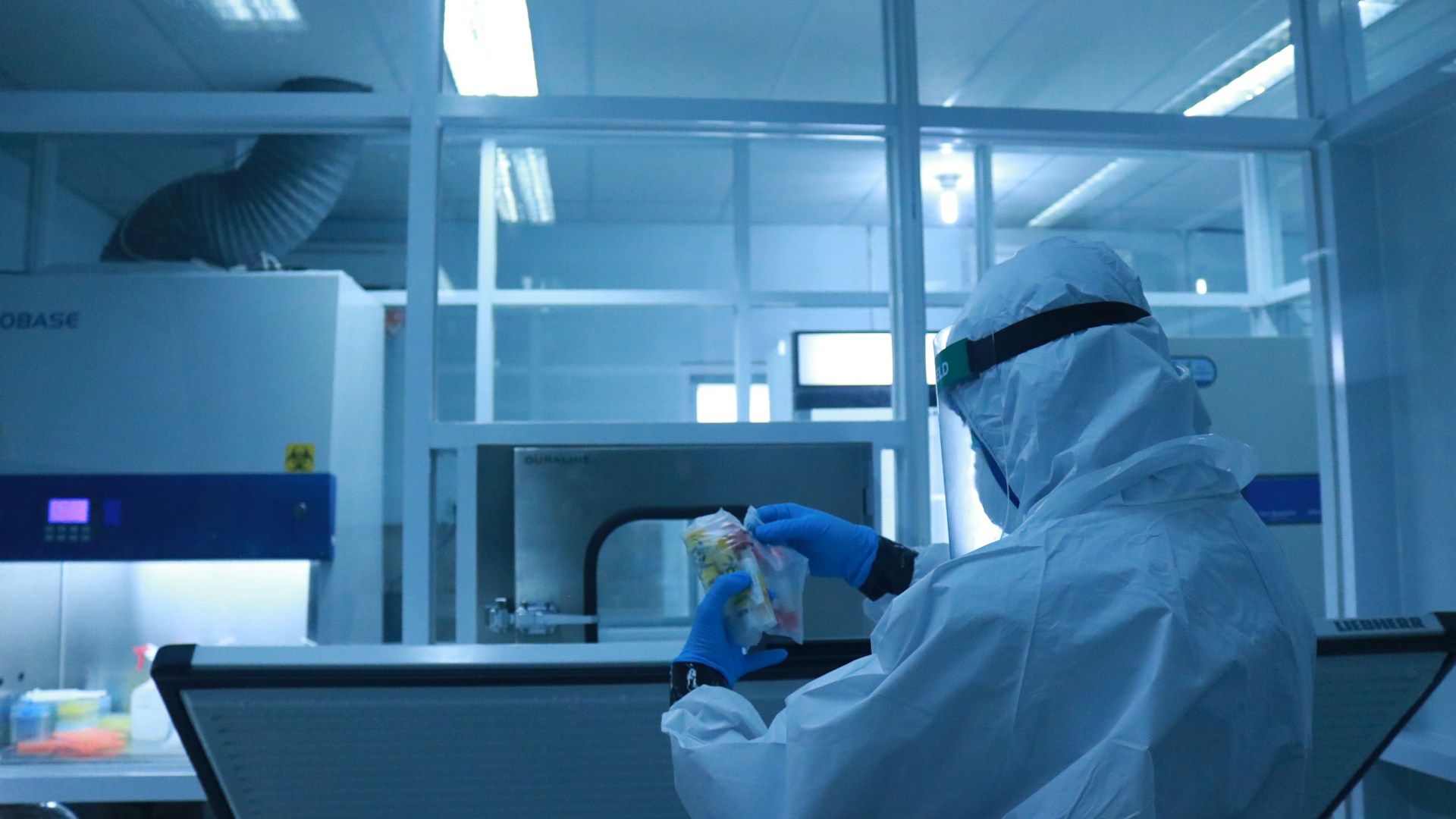
A cleanroom can look complete long before it is ready to support regulated production, research or patient-critical work. The deciding factor is the evidence: measured, traceable and reported results that demonstrate the environment performs as intended. UKAS testing services provide that evidence, giving technical and quality teams a dependable basis for release, audit preparation and ongoing contamination-control decisions.
For organisations operating to ISO standards, GMP expectations or customer-specific specifications, testing is not simply a final project milestone. It is how design intent is translated into demonstrable operational performance. The right testing partner helps establish whether a cleanroom is fit for its defined purpose, identifies issues before they affect production and creates a defensible record for the full facility lifecycle.
What UKAS accreditation means for cleanroom testing
UKAS is the United Kingdom Accreditation Service. Its accreditation of testing laboratories to ISO/IEC 17025 confirms that a laboratory has demonstrated technical competence, impartiality and a controlled quality system for the activities included within its accredited scope.
That scope matters. Accreditation is not a general statement that every service a provider offers is UKAS-accredited. Before appointing a testing specialist, facilities and quality teams should confirm that the relevant cleanroom tests, classifications and measurement ranges are covered by the provider's current scope. They should also confirm that the work will be reported as an accredited activity where applicable.
This distinction has practical value. Accredited testing requires defined methods, suitably calibrated equipment, competent personnel, controlled data handling and clear reporting. For a regulated operation, these controls strengthen confidence in the results and make it easier to explain the basis of a classification or release decision to customers, auditors and regulators.
UKAS accreditation does not remove the need for good engineering or a clear user requirement specification. It validates the reliability of the testing process, not whether the client selected the right cleanliness class, pressure regime or workflow. The strongest projects bring these elements together from the outset.
Where UKAS testing services fit in the cleanroom lifecycle
Testing should be planned as part of a broader commissioning and validation strategy, rather than added at the end of construction. Early planning allows the project team to define acceptance criteria, access arrangements, test states and documentation requirements before the facility becomes operationally busy.
For a new cleanroom, testing commonly follows installation checks and commissioning. The facility must be sufficiently complete for the selected tests to represent its intended condition: air handling systems operating correctly, filters installed, room finishes complete and control systems set to the agreed design parameters. Depending on the test and the standard being applied, measurements may be taken at rest, in an operational state, or both.
In an established facility, periodic testing verifies that performance has been retained. Changes in filter loading, fan performance, room use, maintenance activity or occupancy can affect the contamination-control strategy over time. Retesting after significant modifications, following decontamination where appropriate, or as part of a scheduled requalification programme gives teams evidence that the facility remains under control.
The required frequency depends on the classification, risk profile, regulatory framework and internal quality procedures. A GMP aseptic operation will require a more intensive approach than a controlled manufacturing enclosure with lower risk. A sensible programme is proportionate, documented and aligned with how the room is actually used.
The tests that support controlled performance
A cleanroom classification is often associated with airborne particle counting, but particle counts alone do not prove that the whole facility is performing correctly. The testing package must reflect the design, process risk and applicable standard.
Airborne particle classification
Airborne particle testing is used to classify cleanrooms under ISO 14644-1. Measurements are taken at defined locations using calibrated particle counters, with sample volumes and limits determined by the required ISO class and room size. The resulting data confirms whether the room meets the particle concentration limits for the agreed state of occupancy.
This is a key verification activity, but interpretation is essential. A compliant at-rest classification does not automatically demonstrate suitability during production, when people, materials and process equipment introduce contamination. Where operational performance matters, the test strategy should recognise real working conditions.
Airflow, pressure and containment checks
Airflow visualisation, often using smoke studies, helps show whether air moves in the intended direction and whether critical zones are protected. It can reveal turbulence, dead areas, poor recovery pathways or the impact of operator movement that particle-count data alone may not identify.
Air velocity and air volume measurements verify that supply and extract systems are delivering the specified duty. Differential pressure testing confirms that the pressure cascade between rooms supports the intended containment or protection strategy. In facilities handling potent compounds, hazardous materials or sensitive products, these relationships are fundamental to both product quality and operator safety.
High-efficiency particulate air filter integrity testing is equally important. It checks that installed HEPA or ULPA filters, their housings and associated seals do not permit unacceptable leakage. A filter may be correctly specified and still fail to perform as intended if installation, sealing or damage has introduced a defect.
Recovery and environmental conditions
Recovery testing assesses how effectively a cleanroom returns to its specified particle condition after a defined challenge. It provides useful evidence of ventilation effectiveness and may be particularly relevant where process activities create a temporary contamination burden.
Temperature, relative humidity and air-change performance can also be critical, depending on the process. For pharmaceutical, electronics, medical device and advanced manufacturing environments, environmental stability may directly affect product quality, material behaviour or operator comfort. The acceptance criteria should be based on the user requirement, not assumed from a generic cleanroom template.
Why documentation is as important as measurement
A test result only becomes useful when it is intelligible, traceable and connected to the facility requirement. Quality teams need reports that identify the room, test date, method, instrument status, test locations, environmental conditions, acceptance criteria, results and any deviations or limitations.
Clear documentation supports several decisions at once. It can form part of a validation pack for a new facility, provide evidence for routine requalification, support a deviation investigation or demonstrate control during a customer audit. It also creates a baseline against which future performance can be compared.
Where a result is outside acceptance criteria, the right response is not simply to repeat the test. The underlying cause should be assessed. The issue could relate to a filter seal, fan setting, damaged ceiling grid, door operation, control-system sequence, room loading or a change to the process itself. Effective testing providers combine precise measurement with practical engineering insight, helping clients move from a failed result to a controlled corrective action.
Choosing a provider for UKAS cleanroom testing
For decision-makers, the procurement question is broader than whether a supplier can attend site with a particle counter. The provider should understand the relationship between testing, cleanroom construction, HVAC performance, operational practice and regulatory expectations.
Ask whether the required services fall within the provider's UKAS ISO/IEC 17025 accredited scope, how it manages equipment calibration and whether its reporting format will integrate with your quality documentation. It is also worth establishing how non-conformances are communicated, whether engineers can work safely within your site controls and how quickly support is available when a production or project programme is at risk.
There is a trade-off between selecting separate contractors for construction, commissioning and testing, and choosing an accountable partner that can manage the interfaces. Independent testing can be appropriate where organisational governance requires a distinct verifier. However, fragmented delivery can create delays when a test exposes an installation or controls issue. A specialist with construction and validation capability can often diagnose and resolve issues more efficiently, while maintaining the impartiality and controls required for accredited work.
As one of only two UKAS ISO 17025-accredited cleanroom constructors in the UK, Total Clean Air combines cleanroom engineering with accredited validation expertise. This allows clients to plan verification around their facility, whether it is a bespoke GMP suite, a modular production cleanroom or a flexible laboratory environment.
Plan testing before the room is handed over
The most reliable route to compliant handover is to define the testing strategy while the facility is still being designed. Agree the room classifications, operational states, acceptance criteria, documentation expectations and requalification requirements early. This prevents avoidable redesign, protects the project programme and gives operational teams clarity from their first day in the room.
UKAS testing services are most valuable when they are treated as continuing evidence of control, not a certificate to file away. A well-planned testing programme gives your team the confidence to act early, maintain performance and keep a demanding controlled environment ready for the work that depends on it.