
A cleanroom can meet its particle classification at rest and still present a serious contamination risk during normal operation. Materials move between rooms, people change tasks, equipment is opened, waste leaves the process area and pressure conditions change. Each event can create a pathway for contaminants to travel into a product, process or critical environment.
Preventing cleanroom cross contamination is therefore not a single cleaning activity or a final validation exercise. It is a controlled system of facility design, operational discipline, monitoring and documented assurance. For organisations working to ISO standards, GMP requirements or sector-specific protocols, that system must remain effective throughout the cleanroom lifecycle.
Why cross contamination is a facility-wide risk
Cross contamination occurs when contaminants from one product, activity, area, person or material are transferred to another. The contaminant may be viable, such as bacteria, yeast or mould, or non-viable, including fibres, particulates, residues, oils and fragments generated by equipment or packaging.
The consequences depend on the application. In pharmaceutical manufacture, cross contamination may compromise batch quality and patient safety. In medical-device production, it can affect product cleanliness and traceability. For aerospace, electronics and advanced manufacturing, microscopic particles or chemical residues may undermine precision assembly, reliability or mission-critical performance.
The issue is rarely confined to one failed procedure. A poorly positioned transfer hatch, inadequate pressure cascade, congested gowning area or unclear material route can defeat otherwise diligent operator behaviour. Effective control begins by recognising that contamination follows physical routes, and those routes need to be designed out or tightly managed.
Design controls for preventing cleanroom cross contamination
The strongest contamination-control strategy is built into the facility before handover. Retrofitting controls is possible, but it can be disruptive and more costly where workflows, services and room envelopes are already fixed.
Establish clear zoning and process flow
Cleanroom layouts should separate activities according to their contamination risk. Raw materials, personnel, finished goods, waste and maintenance tools should not rely on the same route simply because it is convenient. Mapping each movement from arrival to exit identifies where crossover can occur.
A well-planned facility creates distinct dirty-to-clean progression, with appropriately located changing areas, airlocks, pass-through hatches and quarantine space. In higher-risk applications, separate personnel and material airlocks may be justified. The right approach depends on product hazard, process sensitivity, throughput and the classification required, rather than applying the highest level of segregation everywhere.
The aim is practical control. An overly complex route that operators cannot follow during peak production creates its own compliance risk. Good design balances segregation with safe, efficient daily use.
Maintain the pressure cascade
Differential pressure is fundamental to controlling airborne migration between connected spaces. Typically, air flows from cleaner, higher-pressure areas towards lower-grade or less critical areas, helping protect the cleanest zone from ingress. Where containment is the primary requirement, such as handling potent compounds or certain biological hazards, the airflow strategy may need to work differently.
Pressure relationships must be engineered as part of the complete ventilation design, including door operation, airlock recovery, supply and extract balance, and adjacent-room conditions. A pressure reading alone is not enough. Facilities should confirm that the cascade remains stable when people and materials are moving through the space.
Continuous or frequent pressure monitoring, clear alarm limits and defined response procedures help prevent a short-term deviation becoming an unnoticed exposure event.
Select finishes and details that can be cleaned properly
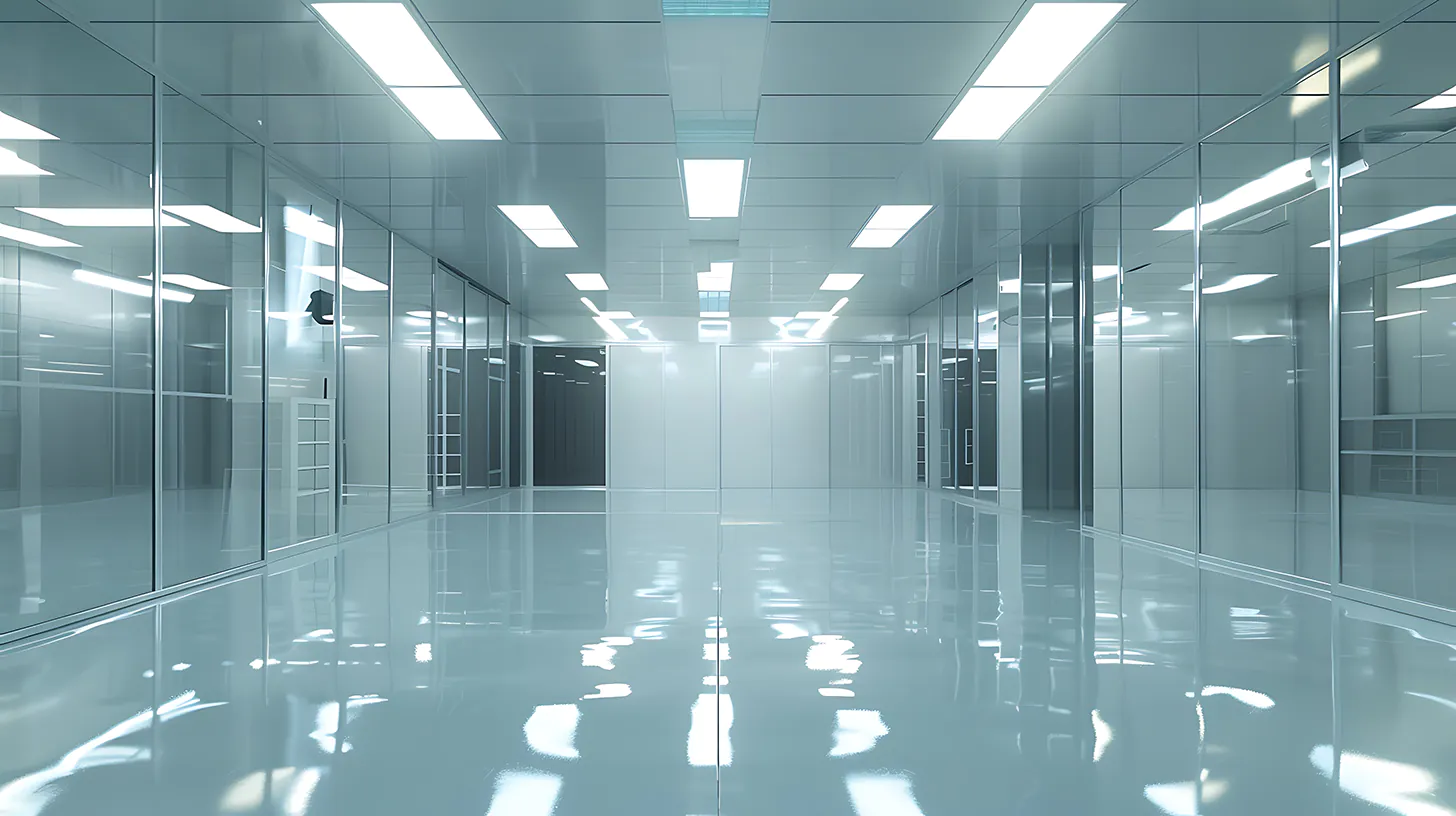
Contamination can accumulate in poorly detailed junctions, unsealed penetrations, damaged wall systems and inaccessible service voids. Cleanroom construction should favour smooth, non-shedding, chemical-resistant finishes with sealed interfaces and minimal ledges.
Ceilings, doors, coving, glazing, flooring and penetrations all require attention. The detail matters because cleaning regimes only work where surfaces can be accessed, cleaned and inspected. Modular systems can provide a controlled, adaptable route to deployment, provided the chosen system and installation details are appropriate for the process, classification and future maintenance needs.
Control people, materials and equipment at the point of use
Even the best engineered environment depends on consistent behaviour. Personnel remain a significant source of particles and viable contamination, while incoming materials and poorly controlled equipment can introduce contaminants directly into critical areas.
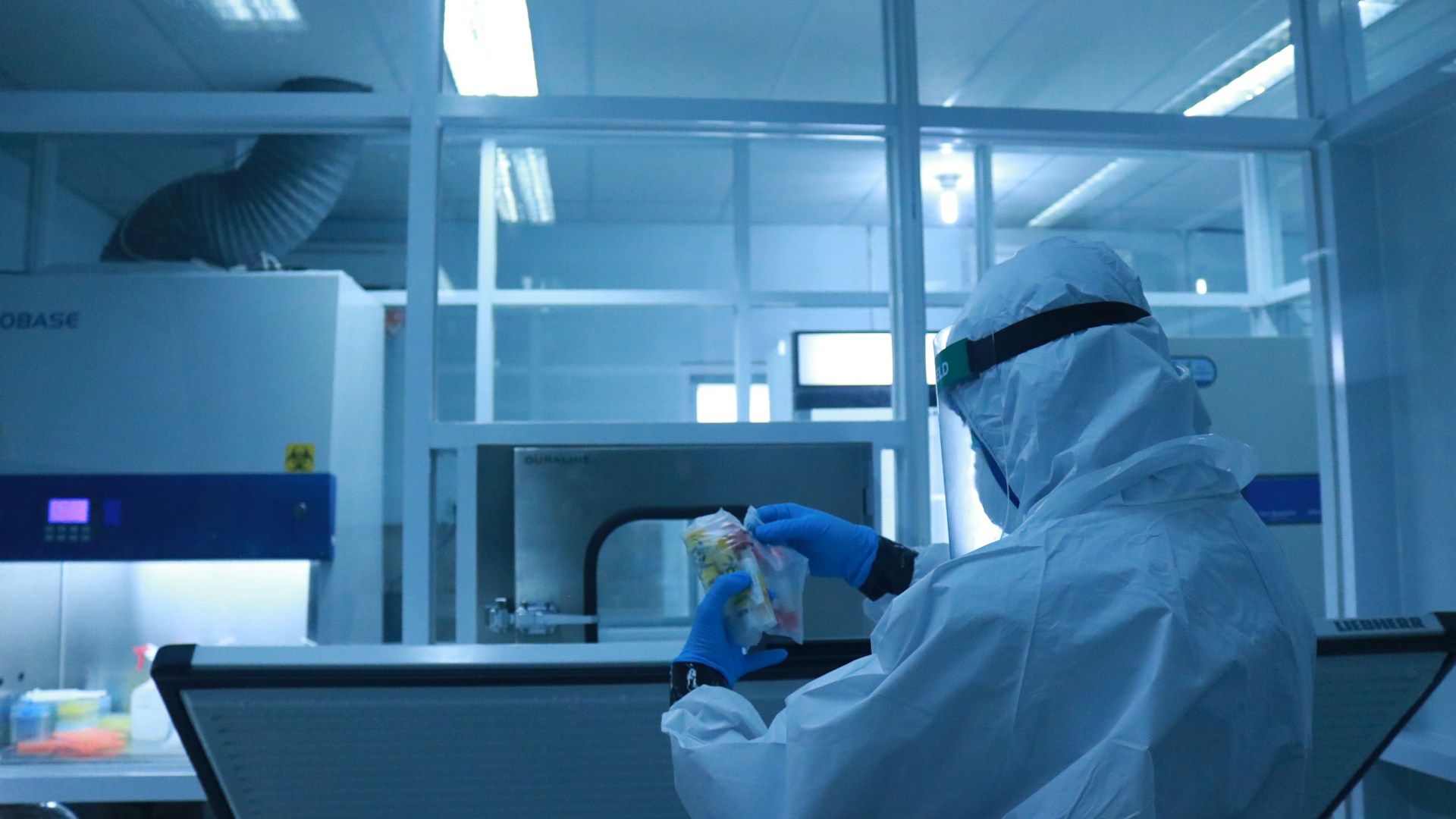
Gowning should be treated as a controlled process, not a preliminary task. Defined garment specifications, changing sequences, visual guidance and competency assessment reduce variation between shifts and contractors. Garments must also be stored, laundered or disposed of in a way that maintains their intended performance.
Material transfer needs equally clear rules. Outer packaging often carries fibres, dust and handling contamination from warehouses or transport routes. It may require removal, wiping or controlled transfer before materials enter cleaner areas. Where materials are transferred through hatches, interlocking arrangements can prevent both doors being opened simultaneously and protect the room pressure regime.
Equipment should be introduced only after a documented assessment of its cleanroom suitability. Consider surface finish, cleanability, particle generation, lubricant control, heat load, maintenance access and whether the equipment disrupts unidirectional airflow. Temporary tools and maintenance equipment are frequently overlooked, despite having moved through uncontrolled areas before entering the cleanroom.
Cleaning is a process, not a reaction
A cleaning schedule is valuable only when it defines what is cleaned, how it is cleaned, who performs the work, which agents are used and how effectiveness is verified. Generic domestic cleaning practices are not suitable for controlled environments.
Cleaning methods should prevent contaminants being redistributed. This means using suitable wipes and mops, working from the cleanest areas towards less clean areas, controlling contact times for disinfectants and changing cleaning materials at defined intervals. For viable-control programmes, rotation of disinfectants and periodic sporicidal treatment may be necessary, subject to the risk assessment and applicable procedures.
Cleaning agents must also be compatible with cleanroom finishes and equipment. An aggressive chemical that damages seals, flooring or coated surfaces may create a longer-term contamination source. Documented training and supervision are essential, particularly where cleaning is carried out by teams not embedded in the production operation.
Verify performance through monitoring and validation
Environmental monitoring converts assumptions into evidence. The appropriate programme will vary by sector and classification, but commonly addresses airborne particles, viable air and surface contamination, pressure differentials, temperature, humidity and airflow performance.
Trend data is more useful than isolated pass results. A gradual increase in particle counts near a transfer point, repeated pressure recovery delays after door opening or recurring microbiological findings in one location can reveal a developing weakness before it affects output. Alert and action limits should be meaningful, documented and linked to defined investigation procedures.
Commissioning and validation establish the baseline from which this ongoing control is measured. Testing should demonstrate that the completed facility performs as intended under relevant operating conditions, not merely when unoccupied. Airflow visualisation, HEPA filter integrity testing, air-change verification, room recovery assessment and particle classification all contribute to a defensible evidence package.
For regulated facilities, independent, UKAS ISO 17025-accredited validation capability provides added confidence that results are traceable, technically sound and suitable for quality-system records. Requalification should then be planned around risk, regulatory expectations, room usage, change control and any evidence of declining performance.
Manage change before it creates a contamination pathway
Many cross-contamination events follow a change that appeared minor: a new packaging format, additional workstation, revised shift pattern, replacement machine or altered cleaning contractor. Each may affect routes, air balance, occupancy, particle generation or cleaning access.
Formal change control ensures that operational changes receive appropriate technical review before implementation. The assessment should consider whether the change affects room classification, airflow, pressure differentials, material segregation, cleaning procedures, monitoring locations or validation status. It should also establish what testing, retraining and documentation updates are required.
This is where lifecycle support becomes commercially valuable. A cleanroom is not a static capital asset. It must continue to perform through production growth, equipment replacement, audit scrutiny and evolving regulatory expectations. Total Clean Air supports that responsibility through cleanroom design, commissioning, accredited validation, decontamination, environmental monitoring and planned maintenance.
The most dependable cleanrooms make the correct action the easiest action. When facility layout, airflow, procedures, cleaning and verification all support the same contamination-control objective, teams can operate with greater confidence and management gains the documented assurance needed to protect product quality, compliance and uptime.