A cleanroom enclosure is not simply a building choice. It affects how reliably your process achieves its particulate, pressure, temperature and humidity requirements - and how confidently you can demonstrate that control to auditors, customers and regulators. When assessing
hardwall vs softwall cleanrooms, the right answer depends on the classification required, the criticality of the process, the available space and how likely the operation is to change.
For a short-term laboratory expansion, a mobile production cell or a lower-risk controlled area, a softwall solution can offer a fast, cost-effective route to operation. For GMP manufacturing, sensitive electronics, high-containment work or a facility expected to perform consistently for many years, a hardwall cleanroom may provide the control, durability and finish required. The enclosure is only one part of the decision. Air handling, pressure cascades, finishes, utilities, commissioning and validation must all work together.
Hardwall vs Softwall Cleanrooms: the fundamental difference
A
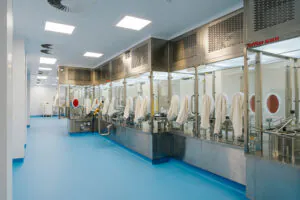
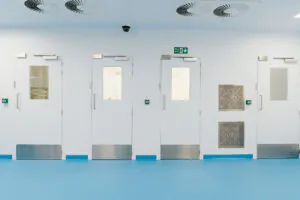
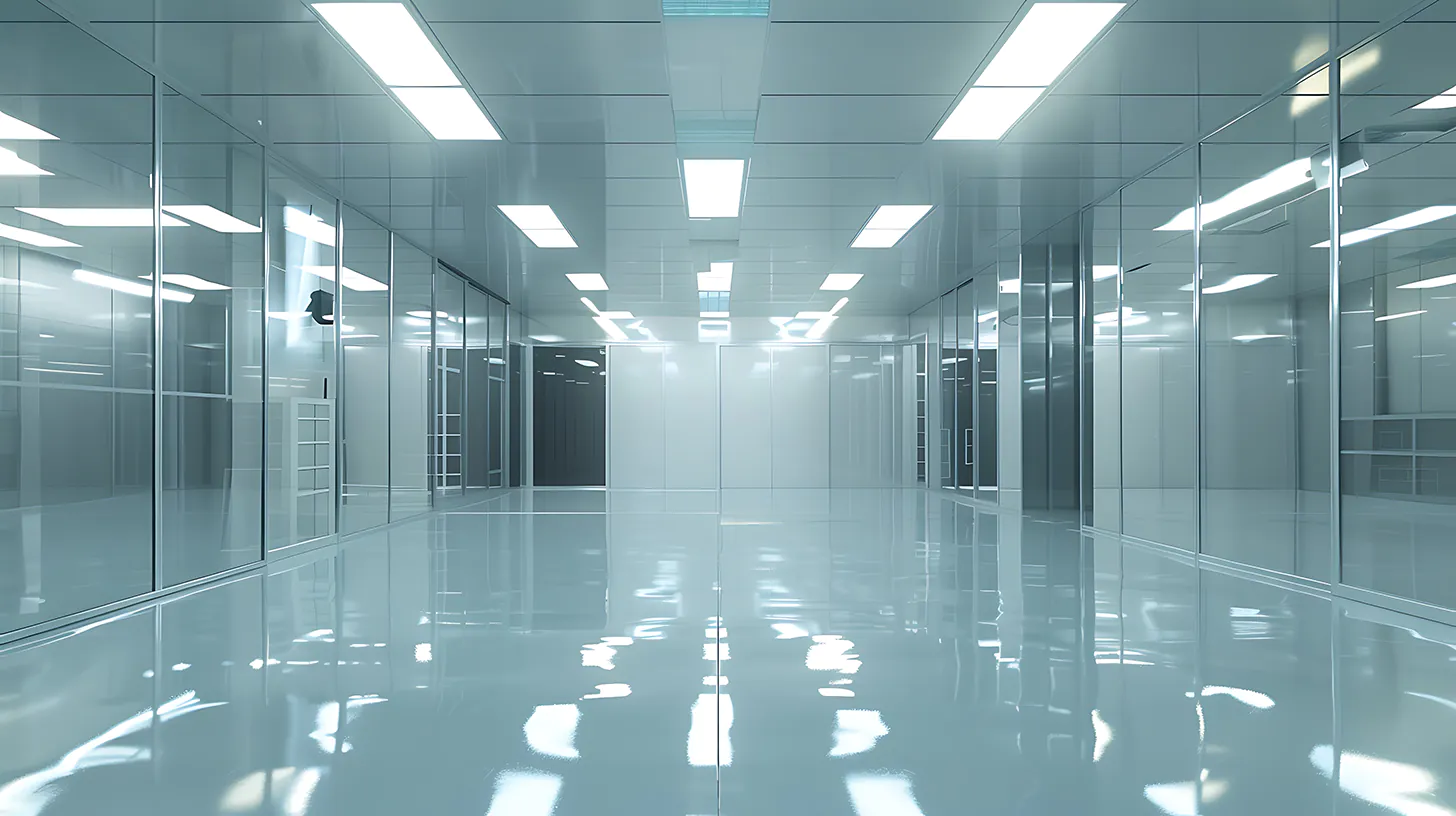
hardwall cleanroom uses rigid, sealed wall panels, usually with a powder-coated steel, aluminium, glass or composite finish. The panels form a permanent or semi-permanent enclosure around the controlled environment. They can incorporate flush glazing, interlocking doors, transfer hatches, service penetrations and integrated ceilings, creating a cleanable envelope with defined interfaces between rooms.
A softwall cleanroom normally uses clear vinyl curtains suspended from a structural frame. HEPA-filtered air is supplied through a fan filter unit or plenum above the workspace, with air generally returning beneath the curtains or through an open perimeter. This arrangement creates a localised controlled zone without the construction programme associated with a fully enclosed facility.
Neither approach is inherently better. The deciding question is whether the enclosure can support the environmental performance, cleaning regime and compliance evidence your process needs over its full operating life.
Where hardwall cleanrooms are the stronger choice
Hardwall systems are typically selected where contamination control must be repeatable, documented and closely managed. Their sealed construction supports defined pressure differentials between adjacent areas, helping to protect higher-grade rooms from less controlled spaces. This is particularly valuable in pharmaceutical production, aseptic preparation, medical-device manufacture and laboratories handling sensitive samples.
Rigid surfaces also tolerate frequent cleaning and decontamination more effectively than flexible curtains. Where operators use disinfectants routinely, where spill management is a realistic consideration, or where surfaces must withstand demanding procedures, panel selection and joint detailing become critical. A correctly specified hardwall system can provide smooth, accessible finishes with fewer places for particulate to accumulate.
The ability to integrate building services is another advantage. Hardwall cleanrooms can accommodate lighting, data, power, process gases, HVAC ductwork, extract systems, fire strategy requirements and specialist furniture in a coordinated design. This makes them suitable for multi-room suites with changing rooms, material airlocks, weighing areas, laboratories and production spaces.
A hardwall installation does require greater initial planning. Services, structural loading, access routes, drainage, heat loads and room adjacencies should be resolved before construction begins. The capital investment is usually higher than a softwall arrangement, but the result may deliver longer asset life, stronger physical protection and a more suitable platform for future validated operation.
Hardwall is not always fully bespoke
Choosing a rigid enclosure does not automatically mean committing to traditional site-built construction.
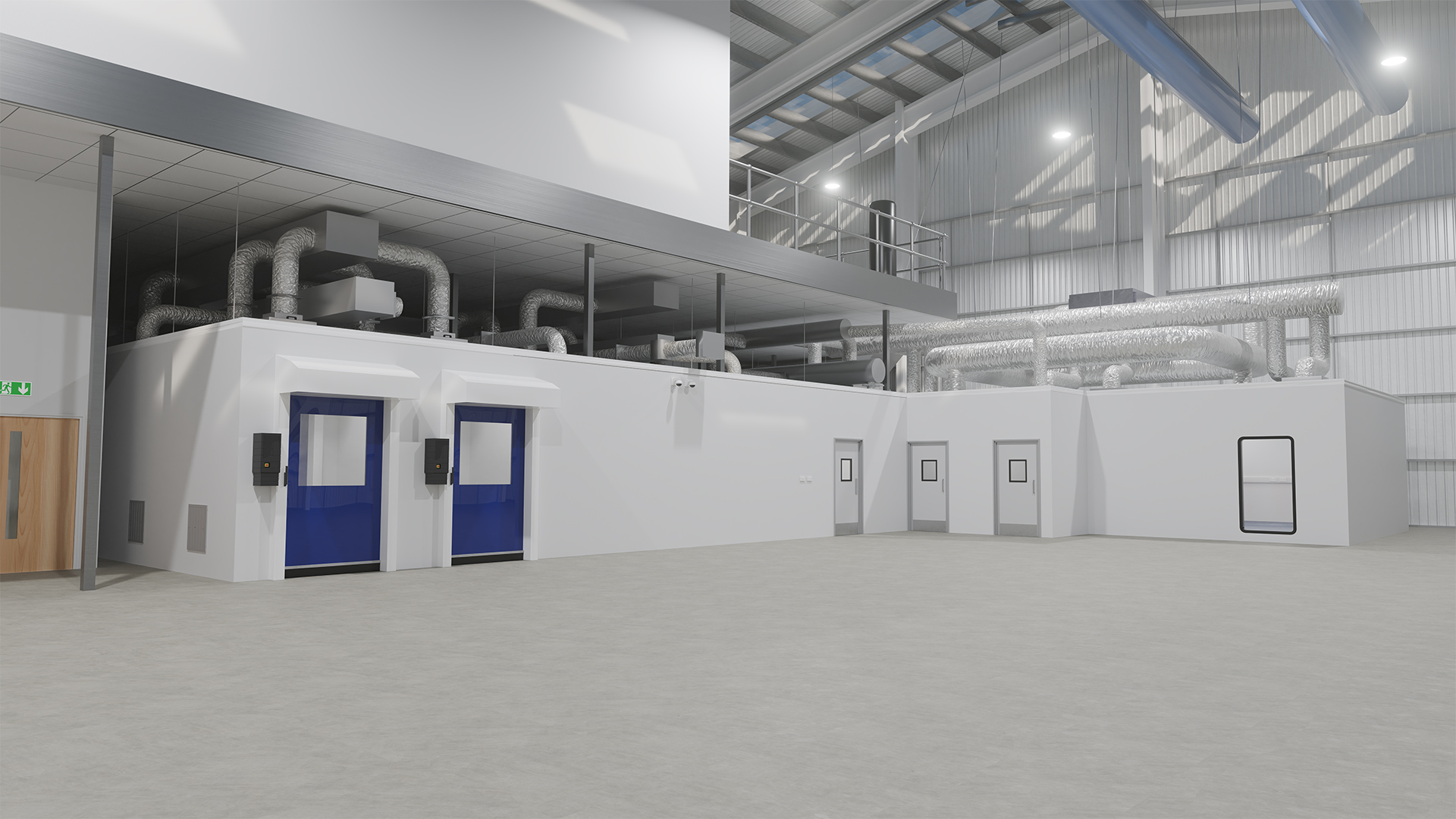
Modular hardwall systems can be configured around a defined process while retaining the advantages of engineered panels, integrated services and controlled finishes. They are often a practical route where programme certainty, phased expansion or future reconfiguration matters.
The key is to distinguish genuinely modular design from a temporary installation that may be difficult to maintain, alter or revalidate. Panel layout, ceiling grid, services containment and access to critical components should all be considered at design stage.
When softwall cleanrooms make commercial sense
Softwall cleanrooms are highly effective when speed, flexibility and localised contamination control are the primary objectives. They can be installed within existing production or laboratory space with relatively little disruption, making them well suited to pilot lines, research environments, temporary capacity, inspection stations and controlled assembly areas.
Because the structure is lighter and less complex, a softwall cleanroom can often be deployed more quickly and at lower initial cost. It may also be easier to relocate or extend when a programme changes. For organisations working through early product development or fluctuating demand, this flexibility can avoid committing capital to a facility footprint that may soon be unsuitable.
Clear curtains offer practical benefits too. They preserve visibility into the workspace, allow natural light to travel through the area and make operator activity easier to observe. In appropriate applications, they can provide an efficient means of achieving a controlled environment around a specific process rather than conditioning an entire room.
However, flexibility comes with limits. Curtain interfaces are less suited to maintaining tightly controlled pressure relationships, and they may be vulnerable to disturbance from traffic, equipment movement or frequent operator access. They can also be harder to reconcile with intensive cleaning, stringent material-flow controls and a premium finished appearance. A softwall system is best treated as an engineered solution for a defined risk profile, not as a universal substitute for a sealed cleanroom suite.
Classification, airflow and pressure determine suitability
The required ISO classification or GMP grade should shape the enclosure decision, but classification alone is not enough. A cleanroom must achieve and maintain its specified airborne particulate performance in its intended state of occupancy. This depends on airflow volume, filtration efficiency, air-change rate, room geometry, equipment heat loads, personnel behaviour and cleaning discipline as well as the walls themselves.
Softwall cleanrooms are commonly associated with unidirectional airflow arrangements and localised clean zones. They can be very effective for protecting a process from particulate contamination where the surrounding environment and operational activity are well controlled. Yet their open lower perimeter can make pressure control less predictable than in a sealed hardwall room.
Hardwall cleanrooms are generally more appropriate where pressure cascades are required between rooms. For example, a facility may need to maintain a positive pressure differential to protect a clean process from ingress, or negative pressure to contain a hazardous material. Achieving this reliably requires careful control of supply air, extract air, leakage paths, doors and transfer routes.
Temperature and relative humidity requirements also deserve early attention. If a process has narrow tolerances, the HVAC system must be sized and controlled for seasonal variation, occupancy, process equipment and fresh-air demand. Adding a cleanroom enclosure without resolving these factors can produce a space that looks compliant but struggles to perform consistently.
Consider lifecycle cost, not purchase price alone
The initial quote is only part of the commercial picture. Decision-makers should assess the cost of energy, consumables, cleaning, maintenance, filter replacement, monitoring, periodic testing and any disruption caused by changes to the operation.
A softwall installation can reduce upfront expenditure and shorten deployment time. That may be the right commercial decision for a non-permanent requirement. But if frequent repairs, curtain replacement, operational compromises or later conversion to a hardwall facility are likely, the apparent saving can narrow.
Conversely, a hardwall cleanroom may carry a higher capital cost but enable clearer zoning, more durable finishes and more dependable service integration. It can also simplify the management of a high-value process by creating defined routes for people, materials and waste. The appropriate choice depends on the cost of contamination, downtime and compliance failure within your own operation.
Design for validation and operation from the start
Whether the enclosure is hardwall or softwall, the project should begin with a clear user requirement specification. This document should define the intended process, room classification, occupancy, equipment, utility needs, environmental limits, monitoring points, cleaning methods and acceptance criteria. It gives the design team a measurable basis for selecting the correct system.
Commissioning and validation should not be left until the end of installation. Airflow visualisation,
HEPA filter integrity testing, airborne particle counting, pressure differential testing, temperature and humidity verification and recovery testing may all be required, depending on the facility and applicable standard. The test strategy should reflect the actual operating risk, not a generic checklist.
For regulated environments, documentation matters as much as physical performance. Drawings, material specifications, commissioning records, test certificates and operating procedures create the evidence trail needed for confident handover and ongoing compliance. UKAS ISO 17025-accredited testing capability provides added assurance that critical measurements are performed to recognised standards.
Total Clean Air approaches enclosure selection as part of a wider controlled-environment programme, combining cleanroom design, construction, commissioning, validation and lifecycle support. That joined-up responsibility helps ensure the completed space is practical for operators as well as capable of meeting its specified performance.
Before selecting a system, ask three practical questions: what contamination risk must the room control, how stable is the process over the next five years, and what evidence will you need to show that performance remains under control? The answers usually make the hardwall or softwall decision much clearer - and help turn a cleanroom project into a dependable operational asset.