
A cleanroom gowning procedure guide is not simply a set of changing-room instructions. It is a controlled process that protects the classified environment from the most persistent contamination source in the facility: people. Skin flakes, hair, fibres, cosmetics and particles carried on everyday clothing can compromise product quality, research integrity and the validated performance of the room.
For pharmaceutical, biotechnology, medical-device and advanced-manufacturing operations, gowning must therefore be designed around the process risk, cleanroom classification and applicable quality system. A well-written procedure gives operators clear, repeatable actions. A well-designed gowning area makes those actions practical under day-to-day production conditions.
Why gowning discipline protects cleanroom performance
Personnel are mobile particle generators. Even when staff are standing still, they shed particles and microorganisms. Movement, conversation and poorly fitted garments increase that burden. Gowning controls the transfer of contamination from uncontrolled areas into progressively cleaner zones, while helping to preserve pressure cascades and defined personnel flows.
The consequences of weak control vary by sector. In aseptic manufacture, an error may create a significant microbiological risk. In electronics or aerospace, fibres and electrostatic contamination may affect sensitive components or critical assemblies. In laboratories, inadequate entry practice can undermine repeatability and contaminate samples.
This is why the procedure must be more than a poster on a wall. It should form part of the site contamination-control strategy, supported by training, supervision, qualification and periodic review. For GMP facilities, its detail must align with the site quality management system and the risk assessment supporting the operation. For ISO-classified environments, it must support the conditions under which the cleanroom has been commissioned and validated.
Start with the gowning area, not the garment
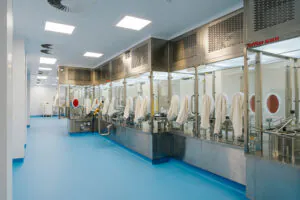
A reliable process begins with the physical layout. The changing area should create a clear progression from lower to higher cleanliness, preventing staff from crossing back over themselves or bringing uncontrolled items into the clean zone. Benches, step-over barriers, lockers, mirrors, dispensers and waste points all have a role in maintaining separation between ‘dirty’ and ‘clean’ sides.
The best layout depends on the facility. A high-throughput manufacturing suite may require separate entry and exit routes, multiple gowning positions and visual management to avoid bottlenecks at shift change. A smaller research cleanroom may use a compact airlock, but still needs a logical sequence and sufficient room for garments to be donned without contacting walls, floors or personal clothing.
Garment selection is equally risk-led. Reusable garments can offer durability and established control where laundering and lifecycle management are validated. Disposable systems can reduce laundering logistics and may suit certain workflows. Neither option is inherently right in every application. The fabric’s filtration efficiency, particle shedding, electrostatic behaviour, fit, sterilisation status and compatibility with the work being performed all need consideration.
Cleanroom gowning procedure guide: a controlled sequence
The precise order should be defined in the approved site SOP. It will differ between an ISO 8 support area, an ISO 7 processing space and a higher-grade GMP environment. The principle remains consistent: remove contamination before entry, gown from the head down, avoid touching clean surfaces with unprotected hands, and prevent clean garments from contacting uncontrolled surfaces.
1. Prepare before entering the change area
Operators should arrive in the required personal condition. Jewellery, watches, cosmetics, false eyelashes, strong fragrances and personal items can all introduce particles or complicate cleaning. Site rules should define what is prohibited and how exceptions are managed.
Before approaching the clean side, staff should check that they are fit to enter. Damaged skin, illness, exposed wounds or a compromised garment may require escalation to a supervisor or quality representative. This is particularly relevant where microbiological control is critical. The procedure should make it easy for people to report a concern without creating pressure to proceed regardless.
2. Remove outdoor clothing and personal contamination
In the outer change area, remove coats, outdoor footwear and other non-permitted items in the designated location. Personal possessions should remain in lockers or an approved storage zone, rather than being carried towards the cleanroom.
A step-over bench or demarcation line establishes a physical and visual control point. Staff should not place feet, garments or equipment across both sides of this boundary. If a shoe cover, garment or glove falls onto the uncontrolled floor, treat it as contaminated and replace it rather than attempting to recover it.
3. Perform hand hygiene at the defined point
Handwashing and, where required, hand disinfection are fundamental. The approved method should specify water temperature, soap or sanitiser, contact time, drying method and whether any additional disinfectant is required. Hands must be dry before gloves are donned, as dampness can reduce comfort, damage some materials and encourage poor glove fit.
Hand hygiene is not a substitute for glove discipline. Gloves protect the garment and process only while their exterior remains controlled. Touching doors, faces, eyewear, hair or non-cleanroom surfaces after gloving can invalidate the control achieved during gowning.
4. Don garments in the approved order
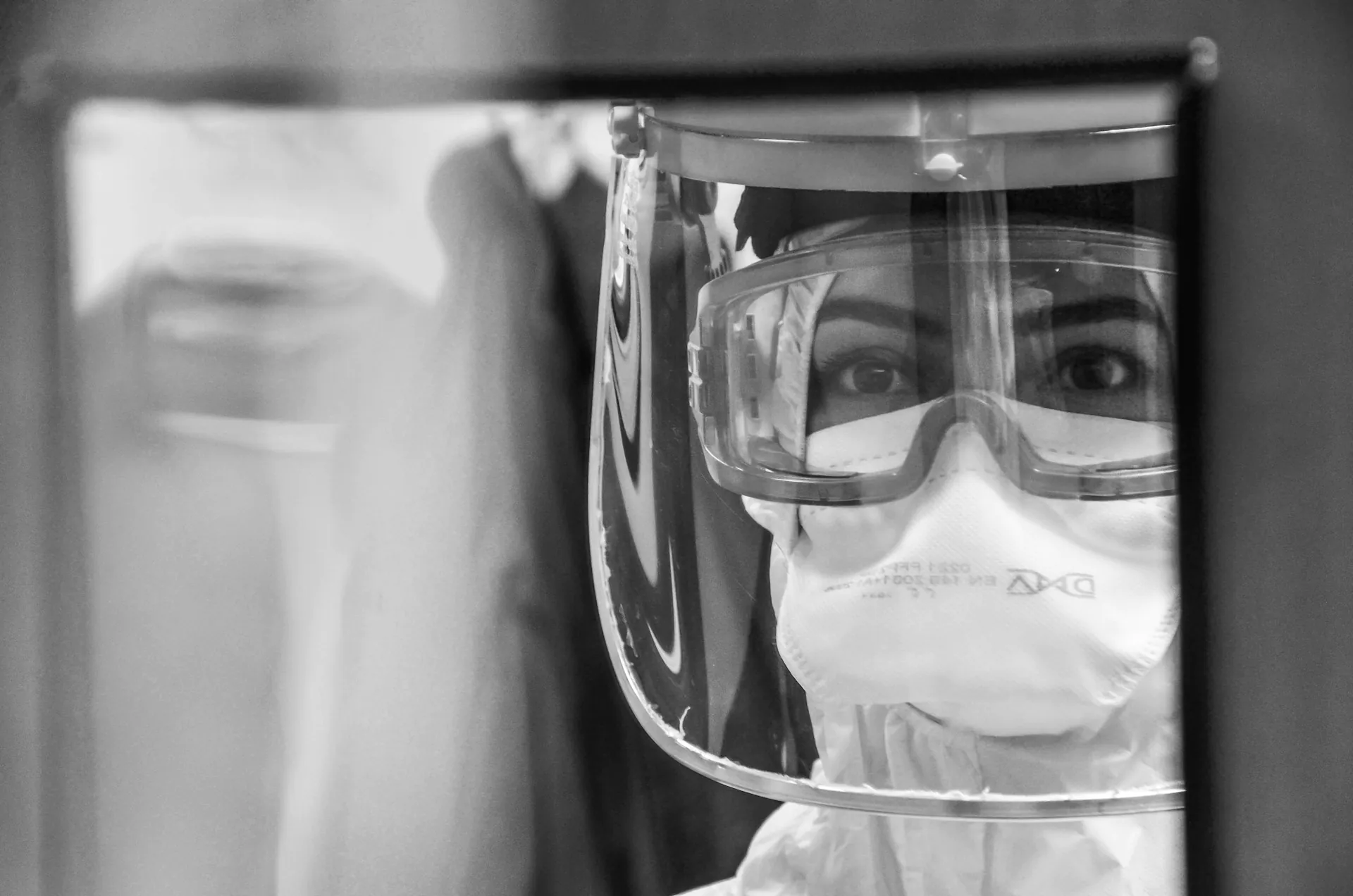
The usual sequence moves from hair and beard containment to coverall or hood, then dedicated footwear or overshoes, and finally gloves. In higher-control environments, goggles, masks and sterile outer garments may also be required. The facility SOP must state the exact sequence, including the handling method for folded garments and which surfaces may be touched.
Operators should handle garments by internal surfaces or approved tabs where possible. A coverall must fully contain personal clothing, with cuffs and closures correctly secured. Hoods should contain hair around the forehead, temples and neck. Footwear should be fully enclosed where required, with no exposed laces or trouser hems.
Fit is a compliance issue, not a matter of appearance. Garments that are too large can drag, snag and shed. Garments that are too small can split or leave gaps. Stock control should provide an appropriate size range, and the procedure should define what to do when the correct size is unavailable.
5. Glove correctly and inspect before entry
Gloves are normally donned last so they cover garment cuffs and reduce the chance of exposed skin. Staff should avoid stretching, snapping or repeatedly adjusting them. Where sanitisation is required, apply the approved agent and allow the stated contact time before entering the room.
A final inspection point, often supported by a mirror, allows the operator to check complete coverage, correct fastenings and visible damage. Some facilities use a trained observer for initial qualification or high-risk entry. This adds time, but it can be justified where the consequences of an entry error are high.
6. Enter without defeating the process
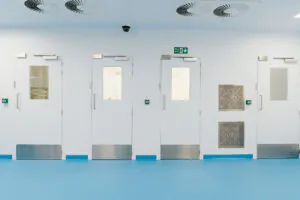
Once fully gowned, move through the airlock or interlocked door system in accordance with site rules. Doors should not be opened simultaneously where pressure control depends on an airlock sequence. Avoid unnecessary conversation and movements that disturb airflow or increase particle generation.
Entry is not the end of the procedure. Operators should maintain gown integrity throughout the shift, sanitise gloves at defined intervals and replace garments or gloves after contamination events. The SOP should clearly define triggers for replacement, including tears, wetness, contact with non-controlled surfaces or exit from the cleanroom.
Training turns instructions into consistent practice
Even a carefully engineered gowning route will fail if people learn through observation alone. Initial training should explain why each action is required, demonstrate the method and require a practical assessment. Competence should be documented before independent entry is permitted.
Periodic reassessment is essential, particularly after a change in garment system, cleanroom classification, process risk or operating procedure. Observational audits can reveal common weak points, such as uncovered hairlines, poorly positioned cuffs or inappropriate glove contact. These findings should be treated as opportunities to improve the system, not merely individual failures.
Visual aids are useful when they reinforce the approved SOP. Clear photographs of the correct garment configuration, placed at the point of use, reduce ambiguity. They should be version-controlled, legible and kept consistent with current practice. An out-of-date poster can be as damaging as no instruction at all.
Verify the procedure against real operating conditions
A gowning procedure should be tested under the conditions in which it will be used. Observe a busy shift change, not only a quiet demonstration. Check whether personnel have enough space, whether garments are available in the correct sizes, whether dispensers are positioned sensibly and whether airflow or pressure differentials are affected by door use.
Environmental monitoring, particle counts, microbiological monitoring where applicable, and trend data can help indicate whether the control strategy is working. These results should be reviewed alongside deviations, audit observations and garment-related incidents. A rising trend does not automatically prove that gowning is the cause, but it warrants a structured investigation.
Changes should be subject to formal change control. A new glove material, a revised bench arrangement or a different laundry provider can affect contamination control and operator behaviour. Assess the impact, update documentation, retrain personnel and determine whether requalification or validation activity is required before implementation.
Build gowning into the cleanroom lifecycle
Gowning performance is closely linked to cleanroom design, operational procedures and ongoing verification. Total Clean Air supports this wider lifecycle approach by combining controlled-environment engineering with commissioning, validation and technical services. The objective is not simply a compliant room at handover, but dependable performance throughout operation.
The most effective gowning process is one that operators can follow correctly every time, even during a demanding shift. When layout, garments, training and verification are aligned, entry becomes a reliable contamination-control barrier rather than a point of uncertainty.