A cleanroom airflow smoke study can reveal a performance issue that pressure readings, air-change calculations and particle counts may not show: where air actually travels once it enters the room. For facilities handling sterile products, sensitive devices or contamination-critical processes, that distinction matters. The intended airflow pattern must protect the critical zone in real operating conditions, not only satisfy a design drawing.
Airflow visualisation is therefore a practical part of commissioning, qualification and ongoing assurance. It gives engineering, quality and operations teams visual evidence that supply air reaches the right areas, sweeps contamination away from exposed product or process points, and does not create undesirable turbulence, reflux or stagnant zones.
What is a cleanroom airflow smoke study?
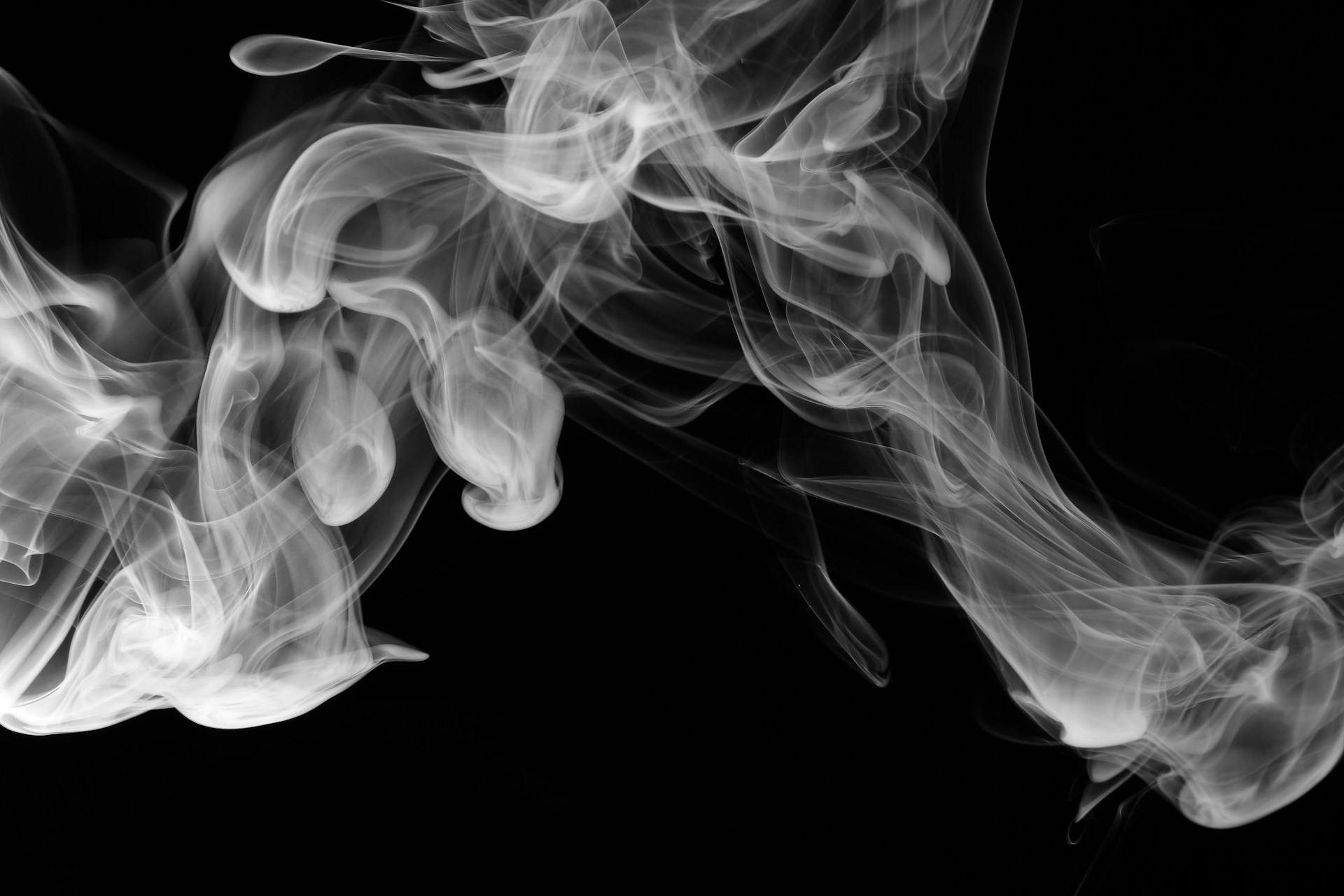
A smoke study uses a controlled, non-toxic visible aerosol to make airflow patterns observable. During the test, the aerosol is introduced at carefully selected locations around supply diffusers, doors, workstations, equipment and critical process areas. Video recording captures its movement through the space.
The objective is not simply to produce an impressive visual record. A properly planned study assesses whether the installed cleanroom performs in line with its contamination-control strategy. In unidirectional airflow areas, this commonly means demonstrating a consistent downward or horizontal sweep over the protected zone. In turbulent or mixed-flow cleanrooms, the focus may be on effective dilution, movement towards extract points and separation between clean and less-clean activities.
The resulting footage should be assessed alongside the facility design, room pressure regime, air velocity measurements,
HEPA filter integrity testing, particle classification results and operating procedures. A smoke study is one element of a wider evidence package, but it is often the clearest way to identify how apparently minor changes affect control.
Why airflow visualisation matters to compliance
For regulated environments, airflow is not an abstract mechanical-engineering consideration. It is part of the barrier that protects product quality, patient safety, research integrity and process reliability.
GMP expectations place particular emphasis on visualising airflow in critical areas. EU GMP Annex 1 requires airflow visualisation studies to demonstrate that unidirectional airflow does not pose a risk to product or open containers, especially where interventions occur. The study should represent the conditions in which the process is performed, including the presence and movement of operators where relevant.
ISO standards do not prescribe one identical smoke-study format for every cleanroom. The appropriate approach depends on the cleanroom classification, process risk, airflow concept and applicable regulatory framework. However, ISO 14644-3 recognises airflow visualisation as a useful test method for examining airflow direction and patterns.
This is where a generic demonstration can fall short. A video of aerosol falling neatly from a terminal filter in an empty room may offer limited assurance if the real process includes filling equipment, screens, local extraction, personnel, material transfer and frequent door activity. Quality teams need evidence that relates to the actual contamination risk.
What a well-planned study should examine
The test protocol should start with risk, not with a camera. Before aerosol is generated, the responsible team should understand the room zoning, the critical control points, expected airflow pathways and activities most likely to disturb the pattern.
Critical zones and product exposure
The first priority is the exposed product, component or process. The study should show whether clean supply air reaches this area without being disrupted by equipment or operator activity. It should also reveal whether air from a less-controlled location can migrate towards the critical zone.
In a
GMP aseptic area, an intervention may cause an operator’s arms, body or equipment to interrupt first-air protection. In a medical-device cleanroom, a fixture, packing station or local extraction point may create a recirculation pattern that increases deposition risk. These are different applications, but the assessment principle is the same: understand what the air does at the point of risk.
Doors, pass-throughs and pressure boundaries
Door opening is a common source of airflow disturbance. A study may assess the effect of opening an airlock door, transferring materials through a hatch or operating a pass-through. The aim is to confirm that directional airflow and pressure cascades provide suitable protection during foreseeable use.
The result is not always that a door must never be opened. It may instead support a defined operational control, such as an interlock sequence, a maximum opening time, a revised transfer route or a requirement to pause an exposed process. Smoke visualisation turns these decisions into evidence-led controls.
Equipment and operator behaviour
Equipment is rarely invisible to air. Isolators, benches, filling lines, microscopes, cabinets and storage can all change the local airflow pattern. So can the practical behaviour of people working in the room.
Studies performed at rest remain valuable during installation and initial commissioning, particularly for confirming the fundamental room pattern. For higher-risk operations, operational studies are normally more meaningful. They should include representative equipment configurations, normal operator positions and defined interventions. The balance depends on risk assessment, but a study that excludes the process cannot fully demonstrate process protection.
From commissioning to routine assurance
Airflow visualisation is especially valuable at key lifecycle stages. During commissioning, it helps confirm that diffuser layouts, extract locations, room geometry and installed equipment work together as intended. It can also identify issues before formal validation progresses, when changes are generally easier and less costly to make.
At initial qualification, the study becomes part of the documented evidence supporting release of the facility for its intended use. The protocol, recordings, test conditions, observations, deviations and conclusions should be controlled in a way that can withstand internal quality review and external inspection.
It should not be treated as a one-off activity. A change to equipment layout, process, airflow setpoint, filter arrangement, room classification, occupancy profile or cleaning method can alter the pattern that was originally accepted. Planned requalification and change control should define when repeat studies are required.
For example, installing a new automated line beneath a terminal HEPA filter may affect first air even if the room’s particle count still meets classification. Equally, a revised workflow may introduce repeated crossings through an area that was previously undisturbed. In both cases, new airflow visualisation may be the most direct way to assess the impact.
Common findings and what they mean
Not every unexpected smoke movement represents a critical failure. The technical significance depends on the location, duration, process state and contamination risk. A brief local eddy in an unoccupied perimeter area does not carry the same consequence as reflux directly above open sterile product.
Nevertheless, several findings need careful investigation. These include reverse flow from lower-grade areas, air rising into a critical zone, persistent dead spots, turbulence caused by obstructions, and a visible break in unidirectional airflow during interventions. The response may involve balancing the HVAC system, repositioning equipment, modifying a screen or canopy, changing operating practices, or revisiting the underlying cleanroom design.
The strongest outcome is not a report stating that every sequence looked acceptable. It is a study that identifies genuine risk, documents the rationale for decisions and supports proportionate corrective action. This protects the facility as well as the people accountable for releasing it.
How to obtain useful, inspection-ready evidence
A credible smoke study depends on controlled execution. The aerosol must be suitable for the environment and introduced without contaminating the space or damaging sensitive equipment. Camera angles, lighting and test locations need sufficient planning to make the footage interpretable. Where the study supports GMP qualification, the recording should clearly show the setup, relevant area, operating state and activity being assessed.
The protocol should define acceptance criteria before testing starts. It should state which conditions will be examined, who performs each intervention, what equipment configuration applies and how observations will be assessed. Vague criteria such as “satisfactory airflow” are difficult to defend. Better criteria link the expected pattern directly to the contamination-control objective.
Independent technical judgement is equally important. A
commissioning and validation partner should be able to distinguish between a cosmetic anomaly and a meaningful control weakness, then advise on a solution that is technically sound and commercially proportionate. For complex facilities, this often requires close coordination between HVAC engineers, cleanroom designers, validation specialists, quality teams and end users.
Total Clean Air applies this lifecycle perspective from cleanroom design and installation through commissioning, UKAS-accredited validation and ongoing technical support. That continuity helps ensure that airflow evidence reflects the facility’s intended operation rather than an isolated test condition.
A well-executed smoke study gives stakeholders more than a compliance document. It gives them a shared, visible understanding of how their cleanroom protects the process - and a practical basis for maintaining that protection as the facility evolves.